


Closing the STEM Gender Gap in Asia-Pacific
Nomin Batbaatar is a ninth grader from Mongolia who lives in Khovd Province. Every year, mining companies organize career events at her school. Most of the activities are focused on boys who want to become engineers. They usually engage only boys for their programmes and most of the examples were given about men working in science and engineering. Nomin often feels left out, even though she is interested in science and wants to learn more about these careers. Across Mongolia, where classrooms are separated by mountains and endless stretches of steppe, many young girls find it difficult to imagine themselves as scientists, engineers, or digital innovators. A significant gender gap has persisted at all levels of science, technology, engineering, and mathematics (STEM) disciplines all over the world. Even though women have made tremendous progress towards increasing their participation in higher education, they are still under-represented in these fields.
According to UNDP in Asia and the Pacific’s report,
Representation of women in STEM remains low across the region, comprising around 23.9 percent of researchers, below the already low global average of 29.3 percent. Yet regional demand for STEM graduates is growing. By 2030, as many as 80 percent of jobs in Southeast Asia will require basic digital literacy, applied information, communication and technology skills. From skills to opportunity, UNDP in Asia and the Pacific is equipping women and girls to close the digital divide and shape the future of a STEM-driven economy.
Advancing STEM and Mining Career for Girls in Mongolia
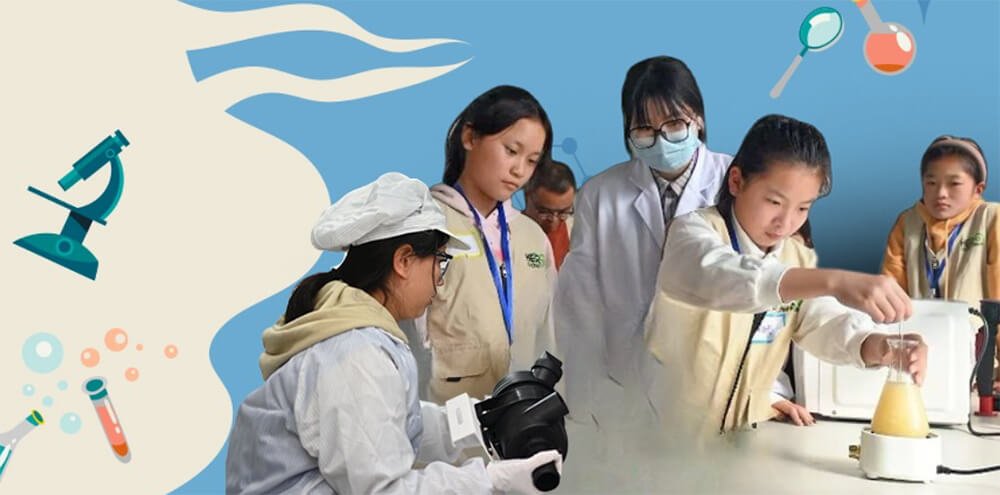
UNDP Mongolia launched a nationwide STEM career advocacy campaign in 2025, traveling over 10,000 kilometers reaching nearly 3,000 secondary school girls in local provinces. Through “Girls in STEM” event, which was designed just for them, girls explored research-backed insights into STEM careers, and even the mining sector, an industry long perceived as “men’s work” in Mongolia and discovered that their talent and ambition are not limited by gender.
“I realized for the first time that many women can work and thrive in this field. I used to think social sciences were the only path for girls, but now I’m excited to explore other fields too,” said Nomin.