


UEFA women’s Euro 2025 highlights why we must invest in gender parity
UEFA women’s Euro 2025
highlights why we must invest
in gender parity to redefine women’s sports
As the UEFA women’s Euro 2025 kicks off, it’s set to be the most impactful yet. Women’s sport is becoming more accessible than ever, with streaming platforms fostering loyal and highly engaged fan bases worldwide. But structural inequities persist and striving for gender parity in sport is not only the right thing to do, but also the smart thing to do.
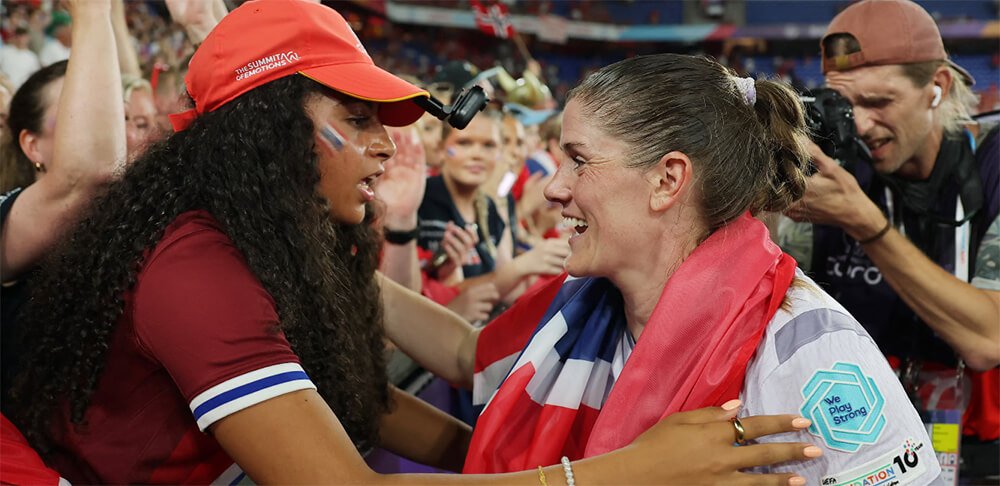
In 2019, I took my then six-year-old daughter, a keen footballer, to the FIFA Women’s World Cup in Nice. She asked, “Why are there so many empty seats?” It was difficult to explain the economics and market failures in women’s sports to a child. Fast forward to 2022, we watched the UEFA Women’s Euro finals in London, with a sold-out stadium capacity of 87,192. It was a very different experience and exactly the one I wanted for my daughter, with England’s victory an added bonus.
We are at a pivotal point for women’s sports. In London, I sensed this shift. Year on year, women’s sports are gaining visibility, viability and engagement. Interest and demand are surging from elite levels down to grassroots. Major women’s sporting events are now featured in prime-time broadcasts, with the FIFA Women’s World Cup 2023 breaking global records with nearly 2 billion viewers. Global revenue for women’s sports is projected to reach $2.35 billion in 2025 – an 80% growth from the previous year.
At the same time, women’s sports are becoming more accessible than ever before, with streaming platforms fostering loyal and highly engaged fan bases. Participation at the grassroots level is on the rise due to investments in youth and community sports.